 WhatsApp
 Téléphone
 Mail
Mail

Freehold Property in Dubai: What Buyers Need to Know
Published: Jul 3, 2026 · Last updated: Sep 17, 2026 · Share
On this page
- Quick Answer
- What Is Freehold Property in Dubai?
- Freehold vs Leasehold in Dubai: Key Differences for Buyers
- Who Can Buy Freehold Property in Dubai?
- Best Freehold Areas in Dubai for Buyers and Investors
- Dubai Freehold Property Fees and Buying Costs
- How to Buy Freehold Property in Dubai
- Benefits of Owning Freehold Property in Dubai
- SAMANA Freehold Off-Plan Projects in Dubai
- Final Words
- Frequently Asked Questions
Interested in buying a property from SAMANA?
Freehold
property in Dubai gives an eligible buyer ownership without a time restriction
in an area approved for foreign ownership, with the property right registered
by the Dubai Land Department. This guide is for expatriates, overseas investors
and first-time buyers who need to understand where foreigners can buy, which
documents prove ownership and what costs and checks apply. Buyers considering a
property under construction should also understand how off-plan property registration in Dubai
differs from receiving a final title deed. Always confirm the ownership status
of the exact unit before paying a reservation amount.
Quick Answer
- Foreigners can own freehold property in areas designated for foreign ownership in Dubai.
- A UAE residence visa is not normally required merely to purchase property.
- Freehold ownership does not have a fixed expiry date, unlike a time-limited usufruct or leasehold right.
- Completed-property ownership is recorded in the Dubai Land Department Property Register and evidenced by an electronic title deed.
- An off-plan purchase is initially recorded in DLD’s provisional register; it does not immediately produce a final title deed.
- Freehold status, project registration, escrow instructions, costs and contract terms must be checked for the exact unit.
- Property ownership does not automatically guarantee a residence visa, rental return or capital appreciation.
Official legal basis: Dubai Law No. 7 of 2006, particularly Articles 4, 6, 9
and 22.
What Is Freehold Property in Dubai?
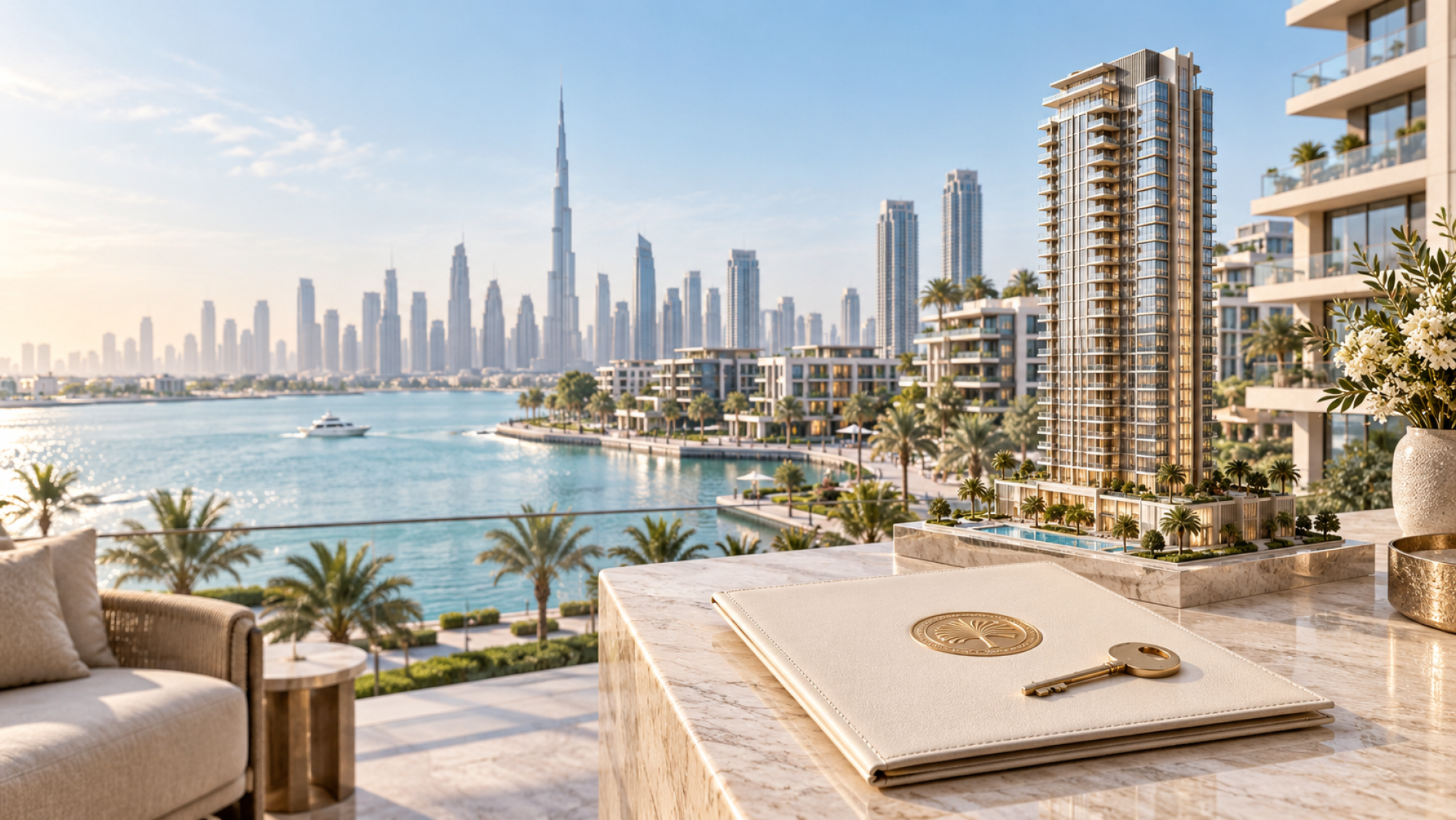
Freehold property in Dubai means full ownership of a real estate asset in a government-designated freehold area. The buyer receives a registered title deed, and the ownership does not expire like a leasehold arrangement. In simple terms, a freehold owner can occupy the property, lease it, sell it, finance it through an approved bank, or transfer it to heirs, subject to UAE law, community rules and the Sales and Purchase Agreement.
Dubai introduced foreign freehold ownership in selected areas in 2002, opening the market to non-UAE and non-GCC buyers. Since then, freehold ownership has become one of the main reasons international buyers consider Dubai property investment, especially in master-planned communities with strong rental demand and long-term infrastructure growth.
Freehold vs Leasehold in Dubai: Key Differences for Buyers
Understanding freehold vs leasehold Dubai is important because the ownership
structure affects control, resale value and long-term planning. Leasehold gives
the right to use a property for a fixed period, usually up to 99 years, while
freehold gives permanent registered ownership in approved areas.
|
Feature |
Freehold |
Leasehold |
|
Ownership term |
Permanent ownership in approved areas |
Fixed term, commonly 30 to 99 years |
|
Registration |
Title deed registered through DLD |
Lease or usufruct right registered as applicable |
|
Resale |
Can be sold, leased or transferred, subject to rules |
Resale and transfer depend on lease terms |
|
Inheritance |
Can be passed to heirs under applicable law |
Rights depend on the remaining lease period |
|
Best suited to |
Long-term owners, investors and end-users |
Short- to medium-term occupiers |
Who Can Buy Freehold Property in Dubai?
Foreign buyers, including UAE residents and non-residents, can buy freehold property in Dubai within designated ownership areas. UAE and GCC nationals have broader ownership rights, while non-GCC foreign nationals must choose projects and communities approved for foreign ownership.
- A UAE residence visa is not required to purchase freehold property in approved areas.
- Individual buyers, spouses, co-investors and eligible companies may hold title, subject to documentation and approval.
- Buyers should confirm the
project status, escrow details, SPA terms and freehold title before making a
booking.
Best Freehold Areas in Dubai for Buyers and Investors
The strongest freehold areas in Dubai depend on budget, lifestyle needs, rental demand and capital growth expectations. Mature districts usually offer established demand, while emerging corridors may offer lower entry prices and stronger long-term upside.
- Prime freehold districts: Dubai Marina, Downtown Dubai, Palm Jumeirah and Business Bay for global recognition, lifestyle value and resale demand.
- High-demand apartment communities: Jumeirah Village Circle, Arjan, Dubai Sports City and Al Furjan for tenant demand, family living and value-led entry points.
- Emerging growth corridors: Majan, Dubai Land Residence Complex and Dubai South for new infrastructure, competitive prices and long-term property investment potential.
- Waterfront and lifestyle
destinations: Dubai Islands, Meydan and selected coastal communities for buyers
seeking lifestyle-led freehold property
in Dubai.
Dubai Freehold Property Fees and Buying Costs
Before buying freehold property in Dubai, buyers should budget beyond the unit price. Typical costs may include Dubai Land Department transfer fees, title deed charges, trustee office fees, mortgage registration fees where applicable, agency fees on resale purchases, service charges, Oqood or off-plan registration charges, and developer administration fees.
Because fees can change by transaction type, ready property, off-plan property, mortgage use and project terms, buyers should always confirm the latest cost breakdown before signing the SPA or making a transfer payment.
How to Buy Freehold Property in Dubai
The process to buy freehold property in Dubai is structured and regulated. The exact steps differ between ready and off-plan purchases, but the buyer journey usually follows this sequence:
1. Choose a freehold unit in an approved community and review the price, floor plan, payment plan and availability.
2. Sign the reservation form and pay the booking amount through the approved channel.
3. Review and sign the Sales and Purchase Agreement for off-plan property or the MOU/Form F for resale property.
4. Complete DLD or Oqood registration, depending on the transaction type, and keep all receipts and official documents.
5.
Receive the title deed or final ownership
documentation once the transfer or handover process is completed.
Benefits of Owning Freehold Property in Dubai
Freehold ownership gives buyers more control than short-term occupancy models. It supports long-term residence planning, rental income potential, resale flexibility and portfolio building in a market designed to attract international capital.
- Long-term ownership: no fixed expiry when the title is registered as freehold.
- Rental income potential: owners may lease the unit, subject to community and regulatory requirements.
- No annual property tax: Dubai remains attractive for investors comparing global real estate markets.
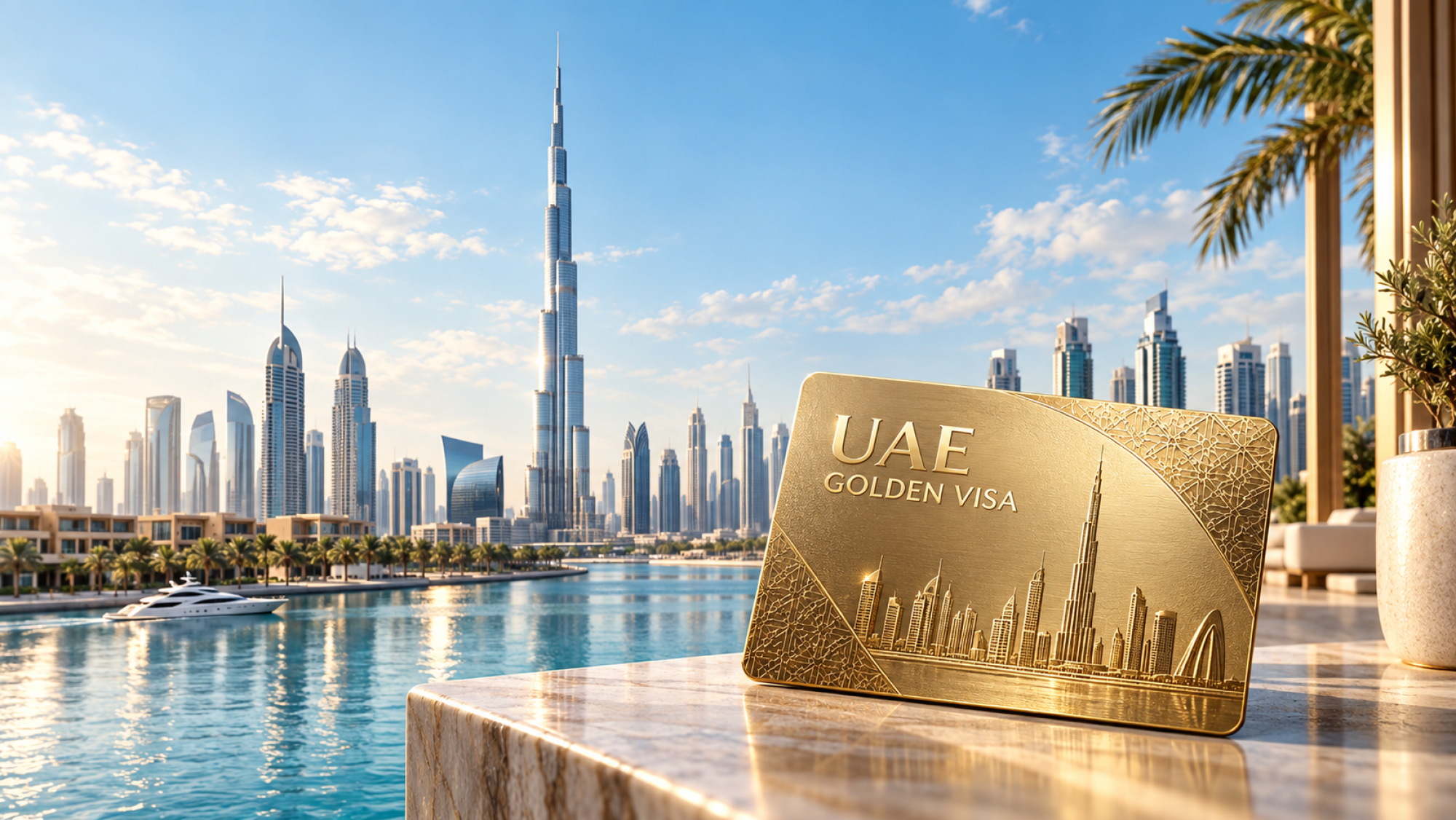
- Golden Visa pathway: property ownership of AED 2 million or more may support a 10-year Golden Visa application, subject to current government approval.
Capital growth potential:
communities linked to infrastructure, tourism, aviation and population growth
may support stronger long-term demand.
SAMANA Freehold Off-Plan Projects in Dubai
For buyers exploring off-plan property in Dubai, SAMANA Developers offers lifestyle-led residences in selected freehold communities, with practical layouts, resort-style amenities and flexible payment structures designed for end-users and investors.
- Jumeirah Village Circle (JVC): SAMANA Waves 2 and SAMANA Ibiza in one of Dubai’s most active rental communities.
- Majan: SAMANA Business Park for buyers looking at mixed-use commercial and investment-led opportunities.
- Dubai Islands: Ocean Pearl 2 for waterfront living in a growing lifestyle destination.
- Arjan: SAMANA Imperial Garden near Dubai Miracle Garden and established family communities.
- Dubai South: SAMANA Hills South near Al Maktoum
International Airport and Expo City Dubai.
Final Words
Freehold property in Dubai gives foreign buyers a clear route to long-term ownership in one of the region’s most active real estate markets. With DLD registration, title deed protection, selected tax advantages, rental potential and possible Golden Visa eligibility for qualifying values, freehold ownership remains a strong reason global buyers choose Dubai.
The right decision depends on more than the unit price. Buyers should compare the community, developer track record, service charges, payment plan, handover timeline, resale potential and tenant demand before committing.
To explore freehold homes across JVC,
Majan, Arjan, Dubai Islands and Dubai South, browse SAMANA's
projects or speak with our sales team on 800-SAMANA.
Frequently Asked Questions
What is freehold property in Dubai?
Freehold
property in Dubai is real estate owned outright in
a designated freehold area, with the title registered through the Dubai Land Department. The owner may
occupy, rent, sell, mortgage or transfer the property, subject to current
regulations.
Can foreigners buy property in Dubai?
Yes. Foreigners can buy property in Dubai
in approved freehold areas. They do not need a UAE residence visa to purchase,
but they must follow the required DLD
registration and project documentation process.
What is the difference between freehold and leasehold in Dubai?
Freehold gives permanent ownership of the
property in an approved area, while leasehold gives usage rights for a fixed
period, commonly up to 99 years. Freehold is usually preferred by long-term
buyers and investors.
Does freehold property in Dubai qualify for Golden Visa?
A real estate investor owning one or more
properties worth AED 2 million or more may apply for a 10-year Golden Visa,
subject to current GDRFA/DLD
requirements and approval.
Is off-plan property in Dubai freehold?
Many off-plan projects in Dubai are
freehold when they are located in designated freehold areas. Buyers should
confirm the project registration, escrow status, SPA terms and final ownership
details before booking.
Is buying property in Dubai a good investment?
Buying property in Dubai can be a good
investment when the location, developer, service charges, payment plan and
tenant demand are carefully reviewed. Returns vary by community, entry price
and market cycle.
Is JVC freehold?
Yes. Jumeirah Village Circle is a
designated freehold community open to buyers of different nationalities, which
makes it popular among end-users, tenants and investors.
What are the best freehold areas in Dubai for investors?
Popular freehold areas include JVC, Dubai
Marina, Downtown Dubai, Arjan, Dubai South, Majan, Al Furjan, Business Bay and
Dubai Islands. The best area depends on budget, rental demand and long-term
growth potential.
You May Also Be Interested In:
Off-Plan vs Ready Property in Dubai: Which Is the Better Investment?