 واتس آپ
 شماره تلفن
 ایمیل
ایمیل
Dubai Metro Blue Line Property Map: What Buyers Need to Know
Published: Aug 13, 2026 · Last updated: Sep 16, 2026 · Share
On this page
- What the Blue Line Means for SAMANA Property Buyers
- Dubai Metro Blue Line Route and Main Property Areas
- Which Areas Could Benefit from the Dubai Metro Blue Line?
- How Could the Blue Line Affect Dubai Property Demand?
- What to Check Before Buying Near the Blue Line
- The Bottom Line
- Frequently Asked Questions
Interested in buying a property from SAMANA?
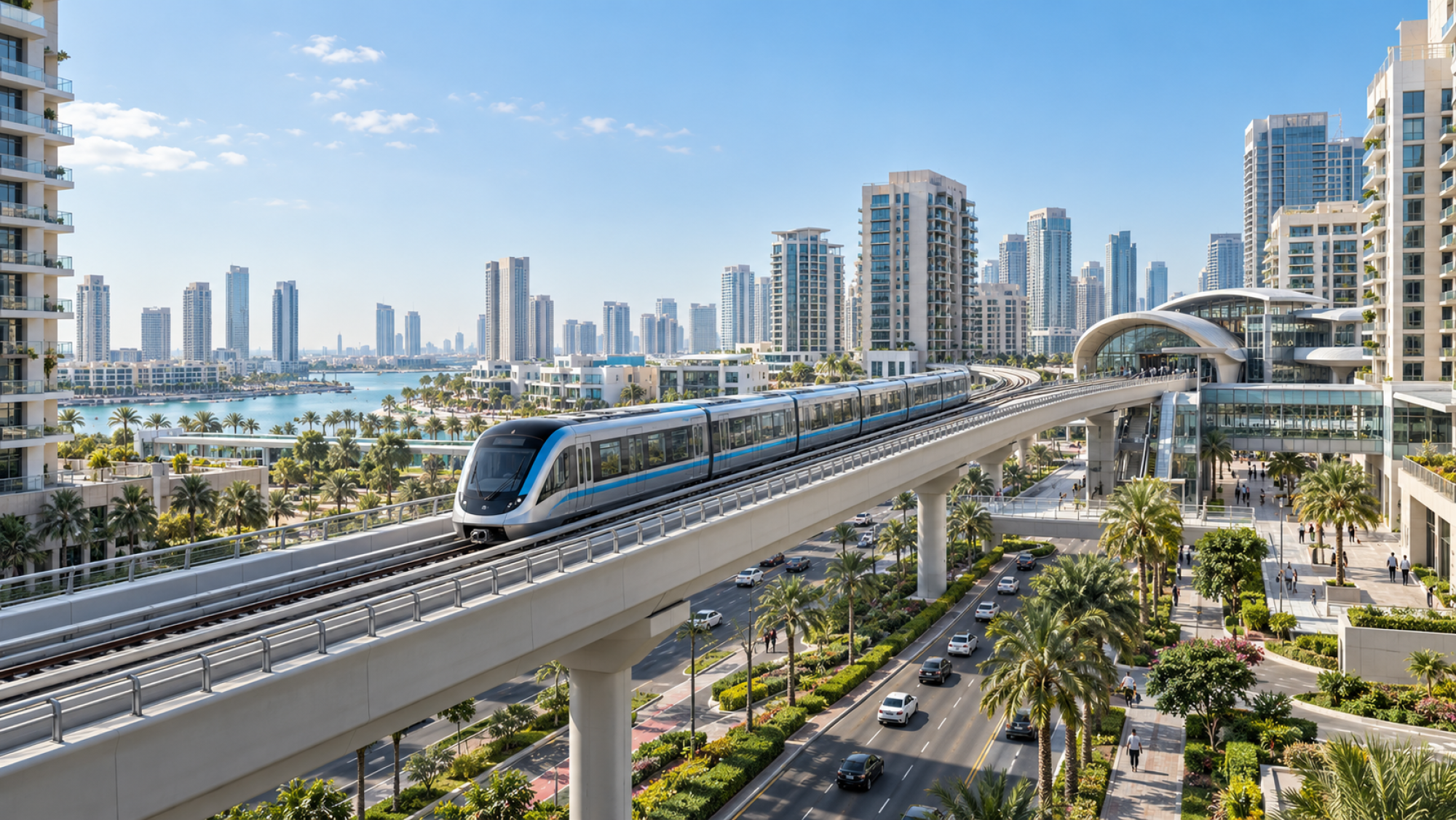
The Dubai Metro Blue Line property map
identifies a major connectivity and property growth corridor across eastern
Dubai. Planned for 2029, the route will connect residential, business and
academic districts with the Red and Green Lines. Investors can compare SAMANA projects
across Dubai based on location, infrastructure, road access, tenant demand
and long-term investment potential.
What the Blue Line Means for SAMANA Property Buyers
The communities directly served by the Blue
Line are not the only locations that can benefit from Dubai’s continued
infrastructure investment. A major transport project can redistribute travel
patterns, improve access between residential and employment districts and
strengthen confidence in the city’s long-term growth corridors.
This is the relevant investment lens for SAMANA buyers. Rather than treating every SAMANA development as a Blue Line property, buyers should use the route as evidence of Dubai’s wider commitment to connected urban growth. SAMANA projects in other parts of the city should be assessed on their own strengths: access to major roads, proximity to workplaces and daily amenities, planned infrastructure, community maturity, future supply and the needs of the likely resident. This approach also aligns with the broader principles in the Dubai 2040 Urban Master Plan property guide.
Dubai Metro Blue Line Route and Main Property Areas
The confirmed route is divided into two
connected branches:
· Creek branch: Creek in Al Jaddaf, Dubai Festival City, Dubai Creek Harbour, Ras Al Khor and International City, continuing towards Dubai Silicon Oasis and Dubai Academic City.
·
Centrepoint branch: Centrepoint
in Al Rashidiya, passing through Mirdif and Al Warqa before meeting the other
branch at International City 1.
|
Route area |
Communities to assess |
Main property question |
|
Creek corridor |
Dubai Creek Harbour, Festival City, Ras Al Khor |
Is the metro benefit already reflected in the price? |
|
Central interchange |
International City |
How close is the exact building to a practical station route? |
|
Knowledge corridor |
Dubai Silicon Oasis, Academic City |
Will professional and student demand support the unit type? |
|
Centrepoint corridor |
Mirdif, Al Warqa |
Will end-user demand improve with easier city access? |
Which Areas Could Benefit from the Dubai Metro Blue Line?
Dubai Creek Harbour
The planned Dubai Creek Harbour Metro Station could improve access to central Dubai and strengthen demand for waterfront property. Investors should compare prices, service charges, future supply and actual walking distance to the station.
International City
International City could see a major connectivity boost because both Blue Line branches meet at International City 1. Affordable property prices may attract rental investors, but building quality, occupancy and service charges require careful comparison.
Dubai Silicon Oasis
The Dubai Silicon Oasis Metro Station could increase demand from professionals, students and residents seeking convenient transport. Investors should assess rental demand, upcoming supply and the property’s actual connection to the station.
Dubai Festival City
The Blue Line could improve access to Dubai Festival City’s homes, retail, offices and waterfront attractions. Better connectivity may support rental and resale demand, although buyers should consider the area’s higher property prices.
Mirdif and Al Warqa
New Blue Line stations could improve connectivity for the family communities of Mirdif and Al Warqa. Buyers should check the exact station location, pedestrian access, feeder buses and distance from the property.
Dubai Academic City and Ras Al Khor
Dubai Academic City property may benefit from demand among students, faculty and professionals. Ras Al Khor offers more selective potential depending on new residential projects, amenities and last-mile connectivity.
How Could the Blue Line Affect Dubai Property Demand?
Metro access can improve a property’s
appeal by shortening some journeys, reducing dependence on private vehicles and
expanding the number of people who can conveniently live in an area. It may
also increase an area’s visibility among tenants and future buyers.
The impact will not be equal across every building. A property may be located within a served district but still require an inconvenient walk, road crossing or feeder connection. Construction activity, noise, new supply and a price premium already built into the market can also affect the outcome.
RTA has indicated that property values
around stations could rise by up to 25%. This should be treated as an
area-level potential estimate, not a promised return for an individual
property. A strong purchase should remain sensible even if no additional metro-related
price growth occurs.
What to Check Before Buying Near the Blue Line
- Confirm whether the property is near a confirmed station corridor or merely within the wider community.
- Measure the practical route from the building entrance, including crossings, pavements and expected station access.
- Compare recent sales and realistic rents for similar units in the same building or project.
- Review service charges, maintenance, vacancy and management costs before estimating rental income.
- Check new residential supply expected before and after the planned opening.
- For off-plan property, verify project registration, escrow arrangements, construction progress, payment dates and handover terms.
- Choose a unit that works for a clear tenant or future buyer even without a metro-related price premium.
Investors who are still choosing between
future growth and immediate rental income can compare off-plan versus
ready property in Dubai. For a wider framework covering location,
tenant demand, costs and resale potential, read the SAMANA
properties in Dubai for investment guide.
The Bottom Line
The Dubai Metro Blue Line could strengthen
connectivity across several important communities before and after 2029. Dubai
Creek Harbour and International City have particularly clear transport stories,
while Dubai Silicon Oasis, Dubai Festival City, Mirdif and Al Warqa offer
different combinations of employment, education, family and lifestyle demand.
Dubai Academic City and Ras Al Khor require more selective analysis.
Frequently Asked Questions
When will the Dubai Metro Blue Line open?
The official target is 9 September 2029.
Major infrastructure schedules can change, so buyers should follow RTA updates
and avoid making an investment dependent on one completion date.
Which areas will the Dubai Metro Blue Line serve?
The planned route serves Al Jaddaf, Dubai
Festival City, Dubai Creek Harbour, Ras Al Khor, International City, Dubai
Silicon Oasis, Dubai Academic City, Mirdif and Al Warqa, with connections to
the existing metro network.
What are the best areas to invest near the Blue Line?
Dubai Creek Harbour, International City,
Dubai Silicon Oasis, Dubai Festival City, Mirdif and Al Warqa are among the
main areas to assess. The right choice depends on budget, tenant demand,
station access, property quality and expected supply.
Will the Blue Line increase Dubai property prices?
Improved transport can support demand, but
no price increase is guaranteed. Results will vary by current pricing, station
distance, building quality, future supply and the amount of expected benefit
already reflected in the purchase price.