 Whatsapp
 Phone
Phone
 Mail
Mail

How is Sustainability Driving Changes in Traditional Practices of the Real Estate Sector?
Published: Oct 31, 2024 · Last updated: Sep 21, 2026 · Share
On this page
Interested in buying a property from SAMANA?
Sustainability is changing real estate by influencing how buildings are designed, constructed, operated and maintained. In Dubai, energy efficiency, water conservation, responsible material selection, smart building systems and healthier public spaces are increasingly important parts of development. Dubai Municipality’s Al Sa’fat system also establishes mandatory green-building requirements for new buildings, connecting environmental performance with safety and operational efficiency. These priorities support the wider goals discussed in SAMANA’s Dubai 2040 Urban Master Plan guide. However, terms such as “green,” “eco-friendly” or “sustainable” should be used only when supported by measurable features, approved standards or recognized certification—not as broad marketing claims alone.
Sustainability Is Changing Building Design
Traditional real estate development focused mainly on location, construction cost and usable space. Sustainable design adds energy performance, water efficiency, occupant wellbeing and long-term building operation to the decision-making process.
Examples:
- Efficient building orientation and insulation
- Natural light and ventilation
- Energy-efficient cooling and lighting
- Water-saving fixtures and irrigation
- Shaded outdoor spaces
- Landscaping suited to the local climate
These measures can reduce resource consumption when they are properly designed, installed and maintained.
Dubai’s Green Building Requirements
Dubai Municipality’s Al Sa’fat – Dubai Green Building System sets mandatory sustainability requirements for new buildings in Dubai.
All new buildings must meet the Silver Sa’fa requirements. Developments seeking higher performance can apply additional measures to achieve Golden or Platinum classifications.
The system covers areas such as energy efficiency, water use, building systems, materials, safety and environmental performance.
Smarter Building Operations
Smart technology can help property managers monitor and control:
- Lighting and cooling
- Electricity consumption
- Water usage
- Security systems
- Equipment performance
- Maintenance requirements
However, installing smart-home features does not automatically make a property sustainable. The technology must produce measurable improvements in efficiency or resource management.
Water and Energy Efficiency
Efficient cooling, lighting and water systems can reduce unnecessary consumption during a building’s operation.
Developers may use low-flow fixtures, efficient irrigation, building-management systems and high-performance mechanical equipment. Claims about savings should be supported by specifications, performance data or recognised certification.
Sustainable Materials and Construction
Material selection can influence durability, waste generation and environmental impact. Development teams may consider responsibly sourced, recycled, locally available or longer-lasting materials when these choices meet safety and performance requirements.
Construction planning can also reduce waste through accurate procurement, recycling procedures and efficient site management.
Wellbeing and Liveable Communities
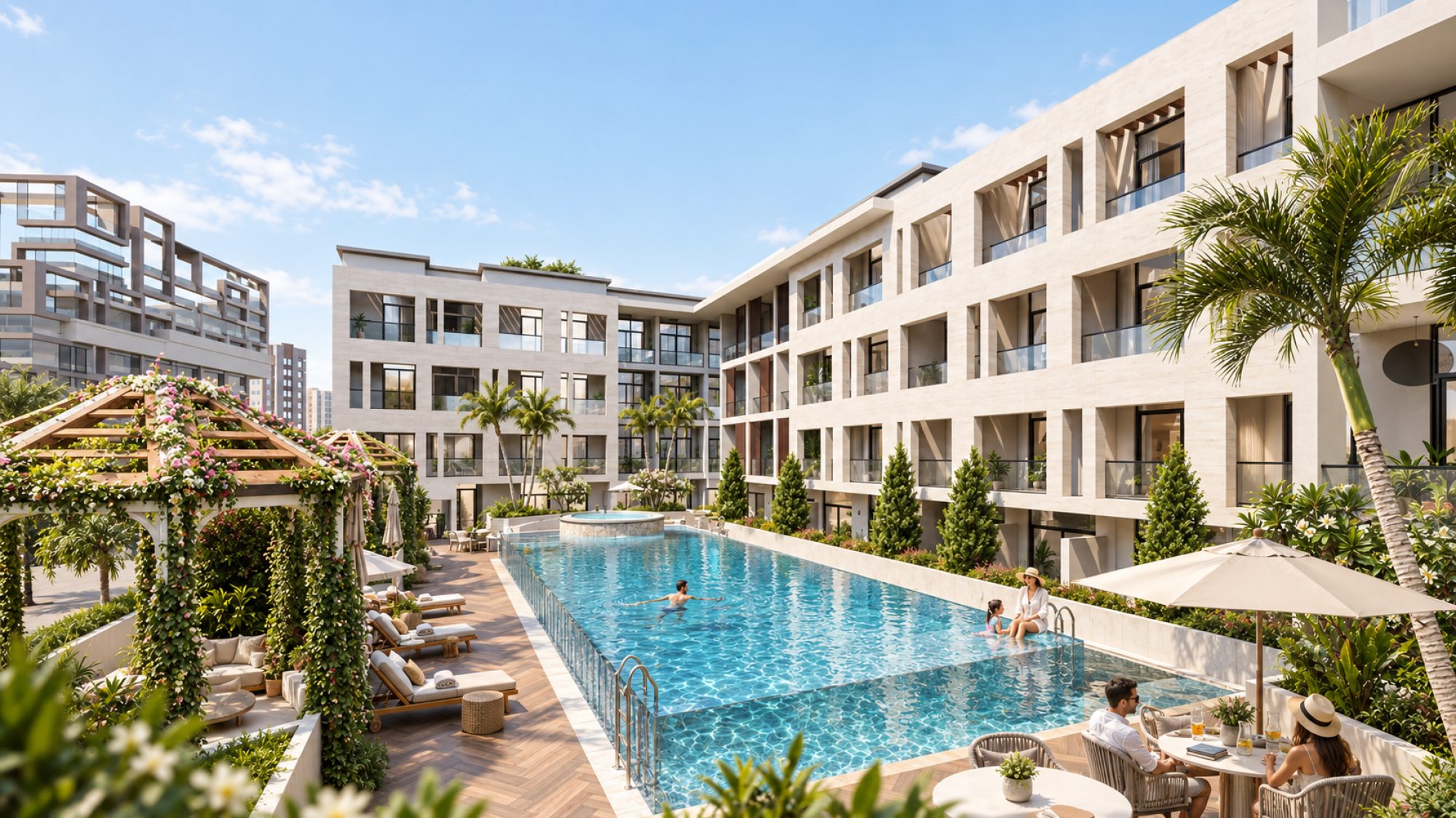
Sustainability also includes the experience of residents. Landscaped spaces, shaded walkways, natural light, fitness amenities and accessible community facilities can support healthier daily routines.
These features should be planned alongside practical requirements such as cooling efficiency, maintenance needs and long-term operating costs.
What Buyers Should Verify
Before accepting a property as sustainable, buyers should ask for:
- The applicable green-building rating
- Energy and water-efficiency specifications
- Details of smart-building systems
- Material and equipment information
- Estimated service charges
- Maintenance responsibilities
- Evidence supporting environmental claims
A project should not be described as certified, green or eco-friendly without clear supporting documentation.
FAQs
1. What is sustainable real estate?
Sustainable real estate aims to reduce resource consumption and environmental impact while supporting occupant comfort, safety and long-term building performance.
2. What is the Al Sa’fat Green Building System?
Al Sa’fat is Dubai Municipality’s green-building rating system. It sets mandatory requirements for new buildings and offers Silver, Golden and Platinum performance classifications.
3. How can buildings reduce energy consumption?
Efficient cooling, insulation, lighting, glazing, building orientation and smart control systems can help reduce energy use when correctly designed and maintained.
4. Does smart-home technology make a building sustainable?
Not automatically. Smart technology supports sustainability only when it measurably improves energy, water, maintenance or operational efficiency.
5. Are sustainable properties guaranteed to achieve higher returns?
No. Rental income and property values depend on location, demand, purchase price, service charges, quality and wider market conditions.
6. How can buyers verify a sustainability claim?
Buyers should request certification details, technical specifications, performance data and confirmation of the standards applied to the development.